The Craft
Tea Making Process
Between a dew-covered leaf on the mountain and the taste in your cup lie a dozen or so steps. This page takes them apart one by one — including the trade-offs we make along the way.
The Difference Is Only in the Middle
Rather than five separate processes, this is one road that forks in the middle. Understand the divergence and you understand Taiwanese tea.
All five teas are identical to this point: picked, withered, tossed. Nothing has diverged yet.
Every difference comes from these three slots. What matters is where fixation sits: first makes an oolong, absent makes a black tea, last makes a red oolong.
The divergence ends and all five teas return to the same equipment: first drying, ball rolling, drying and sorting, roasting, packing. Even the black tea goes through this, which is why it too is ball-rolled.
Switching teas only changes the middle section.
Shared Opening — Day One at the Factory
All five teas are identical to this point: picked, withered, tossed. Nothing has diverged yet.
Plucking
We head up at first light and hand-pick the leaves while they still carry their dew. Maturity sets the backbone of the batch: too tender and the liquor comes on strong but turns bitter, and it is difficult to process; too mature and it turns coarse and thin. One bud with three to four leaves is where we draw the line, and every shoot is judged by the picker, one at a time.
Sun Withering
The leaves are spread outdoors on clean cloth to release moisture. The cell structure softens, and the first aromatics are drawn out right here, in the sun. This step follows the weather, not the clock: strong sun means a thicker spread; an overcast day means spreading thinner, or simply taking longer.
Indoor Withering
The leaves move indoors, onto well-ventilated withering racks. In a temperature- and humidity-controlled room the moisture keeps working its way out, and the maker turns the leaves at intervals so every one of them loses it evenly. Less happens here than anywhere else in the process, and yet this is where the foundation of the aroma is built. It cannot be rushed.
Tossing
The decisive step in oolong. The maker tumbles the leaves so their edges bruise against one another, and oxidation starts at those breaks — the enzymes wake up, and the floral and fruity notes that belong to this tea begin to form. Toss lightly and the oxidation stays light; toss hard and it runs deep. Whether an oolong ends up delicate or full-bodied is settled right here.
The Divergence — Where the Five Teas Split
Every difference comes from these three slots. What matters is where fixation sits: first makes an oolong, absent makes a black tea, last makes a red oolong.
Fixation
Once oxidation has reached the point we want, the leaves go into a drum fixation machine, tumbling continuously inside a hot rotating cylinder. The enzymes are deactivated and oxidation stops on the spot; the grassy note is driven off, a toasted one takes its place, and the aroma is fixed where it stands. This is the brake pedal of tea making — whatever flavour this batch has reached is locked in at this moment, and there is no going back.
Rolling
Straight off the machine and still warm, the leaves are wrapped in cloth and rolled — tightening into balls or strands while the juices are worked onto the leaf surface. That coating is the point: in the pot the leaves open readily, and the flavour comes out whole.
Oxidation
This tea skips this stepFixation has already stopped oxidation, so there is no separate oxidation stage — this is exactly where oolong and black tea part ways.
Shared Finish — Shaping and Refining
The divergence ends and all five teas return to the same equipment: first drying, ball rolling, drying and sorting, roasting, packing. Even the black tea goes through this, which is why it too is ball-rolled.
First Drying
A type-A dryer brings the moisture down and holds the tea steady so it stops changing. After first drying the leaf is still loose — it takes the rolling that follows to become a ball.
Cloth Ball Rolling
The tea is wrapped in cloth, drawn into a ball, tightened in a press, then opened and broken up — and then it starts again. Wrap, roll, break, repeat, several passes over, until the leaves knot into a semi-ball. Those tight little spheres you see in the bag are ground out one pass at a time.
Drying & Stem Sorting
Once the shape is set the tea is dried down to a keeping moisture level, and sorting happens at the same time: long stems are pulled out by a coarse sorter, and a blower lifts away debris and substandard leaf. Drying and sorting are one operation, not two.
Roasting
OptionalHigh mountain oolong is made both roasted and unroasted. Everything listed online is lightly roasted — for the added sweetness, body and consistency. The unroasted version keeps its freshness and floral lift, but it depends on how a given batch turns out and the yield is unpredictable, so it is only offered in the shop or on request, never listed online.
Packaging
As soon as the flavour has landed the tea is packed — nothing is reworked after this. Vacuum-sealed foil shuts out light and air, holding the batch at its best moment until you open it.
Why It Is Done This Way
There are more variables at altitude, so oolong depends more on craft — get the technique right and the quality holds steady. Our processing facility is not beside the tea garden but in a spot with plenty of sun, which makes sun withering straightforward. As for flavour, the weather shifts it a little from year to year: close, but genuinely not identical.
Why Roasting Happens at Home
Primary processing at the factory, refining back home on a cabinet roaster — this is how the division between primary and refined processing actually works in Taiwan. Roasting is a trade: you gain sweetness, body and consistency, and if you push too far you lose the floral top notes and the freshness. Admitting that cost is more honest than calling it 'carefully roasted'.
You have seen how it is made. Now taste it.
All Five Teas, Side by Side
Every difference in one table. Scroll sideways to see all columns.
| All Five Teas, Side by Side | High Mountain Oolong | Jin Xuan | Four Seasons | Honey Black Tea | Red Oolong |
|---|---|---|---|---|---|
| Process family | Partially Oxidised, Ball-Rolled | Partially Oxidised, Ball-Rolled | Partially Oxidised, Ball-Rolled | Fully Oxidised, Ball-Rolled | Heavily Oxidised, Ball-Rolled |
| Oxidation | Light | Light | Light | Full | Heavy |
| Tossing | ✓ | ✓ | ✓ | ✓✓ | ✓✓ |
| Position of fixation | First | First | First | None | Last |
| Separate oxidation stage | No | No | No | Yes | Yes |
| Shape | Ball-rolled | Ball-rolled | Ball-rolled | Ball-rolled | Ball-rolled |
| Roast | Light (online listings) | Light | None (unroasted) | Light | Heavy |
| Origin / elevation | Alishan Meishan 1,200m | Alishan Meishan 800m | Songboling, Nantou 300m | Alishan Meishan 1,200m | Luye, Taitung 350m |
| Source | Our own estate | Our own estate | Partner grower | Our own estate | Partner grower |
| Flavour | Orchid | Milky | Floral | Honey | Fruit & honey |
Every tea is made where that tea belongs.
Tea Mountain Experience
Experience the Tea Mountain
Reading about it is one thing. Step into our Ali Mountain tea gardens and work through it yourself, from plucking to finished leaf — you will not drink tea quite the same way afterwards.
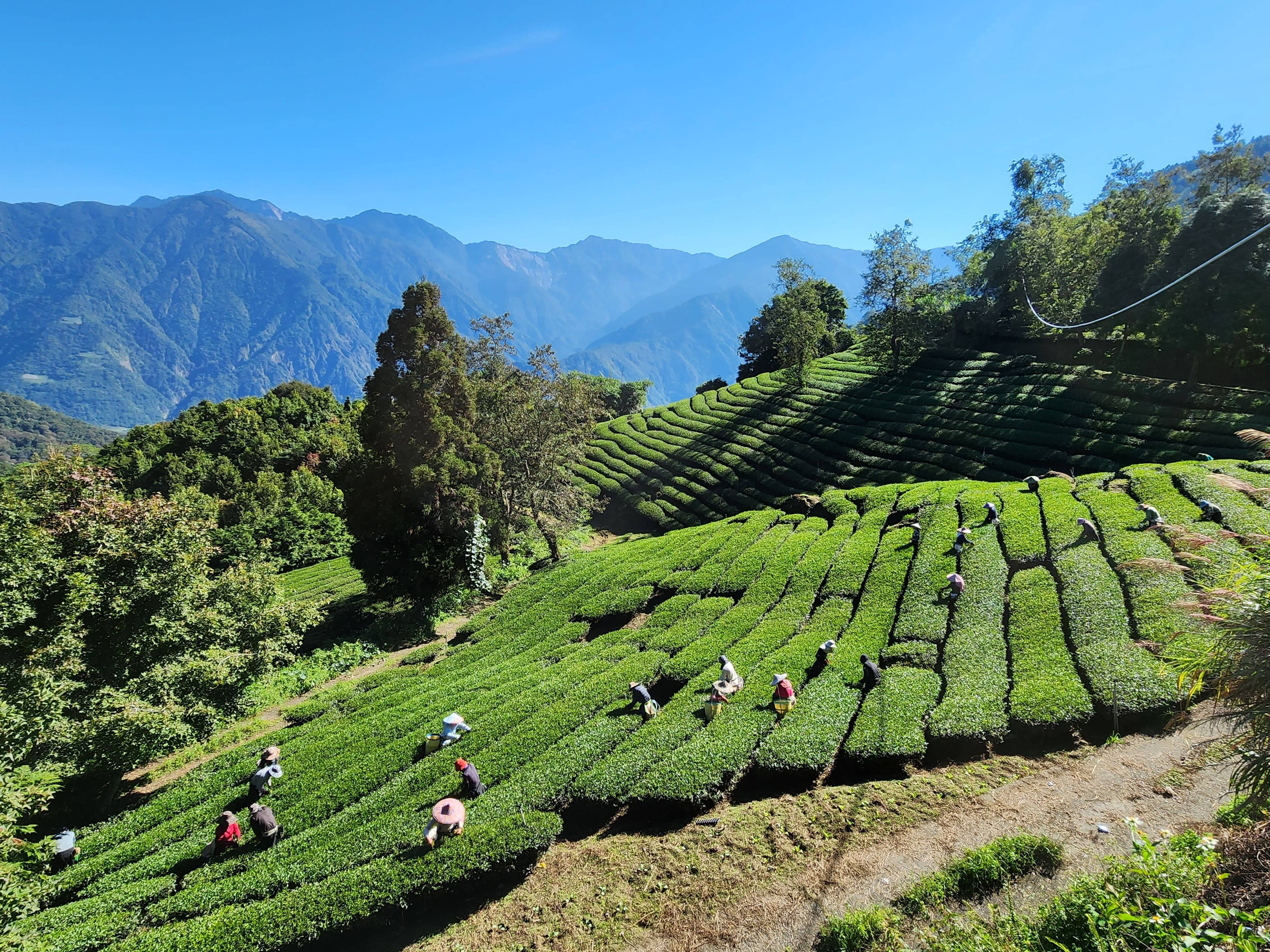
Tea Picking
Stroll through the tea gardens, hand-pick tender buds, and experience a tea farmer's daily morning routine. Great tea starts with careful picking.
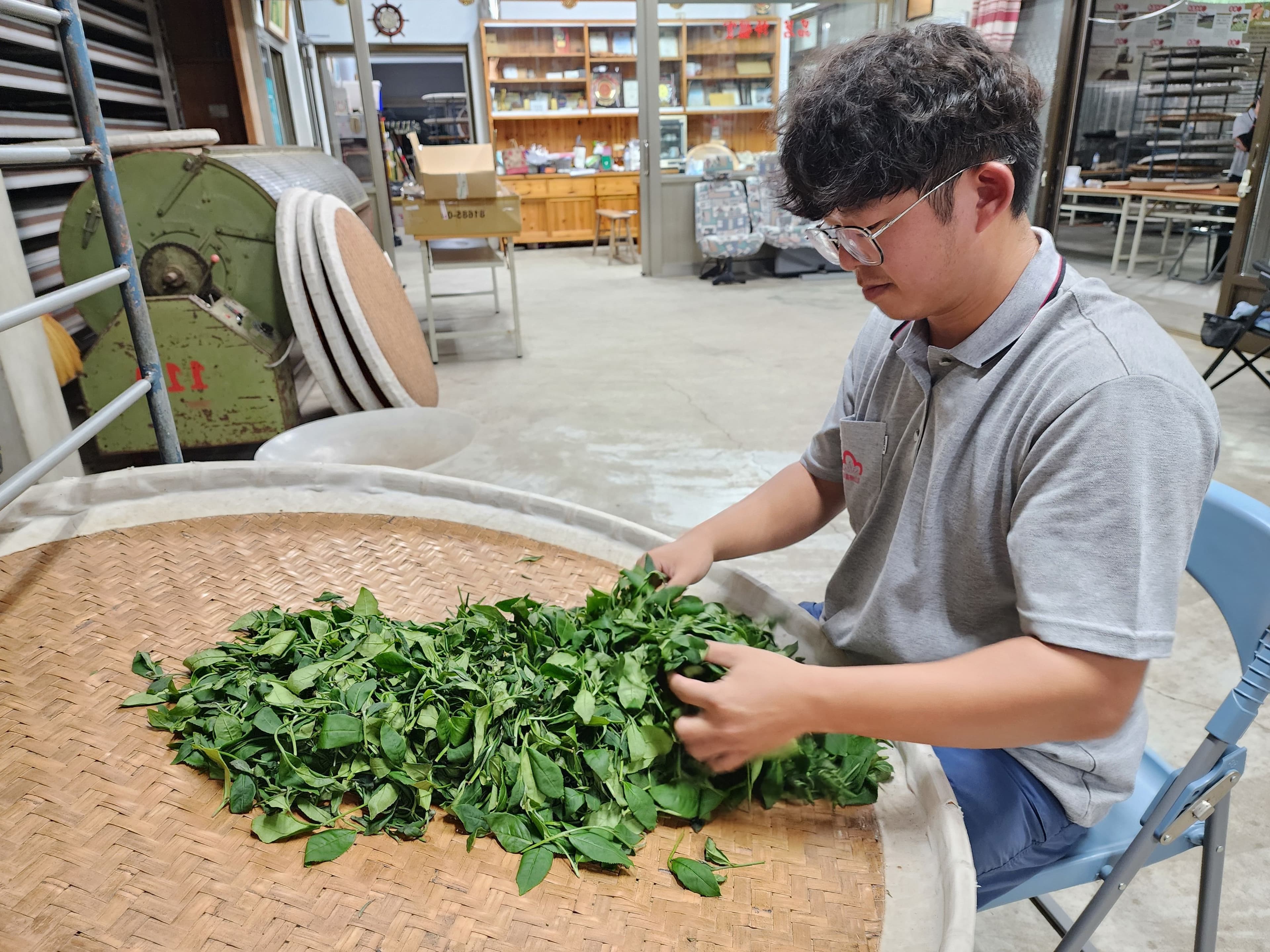
Black Tea Making
Black tea gets its flavour in the rolling and the resting — and that is the part you do by hand. We pick and sun-wither the leaves before you arrive, then dry your batch and post it to you.
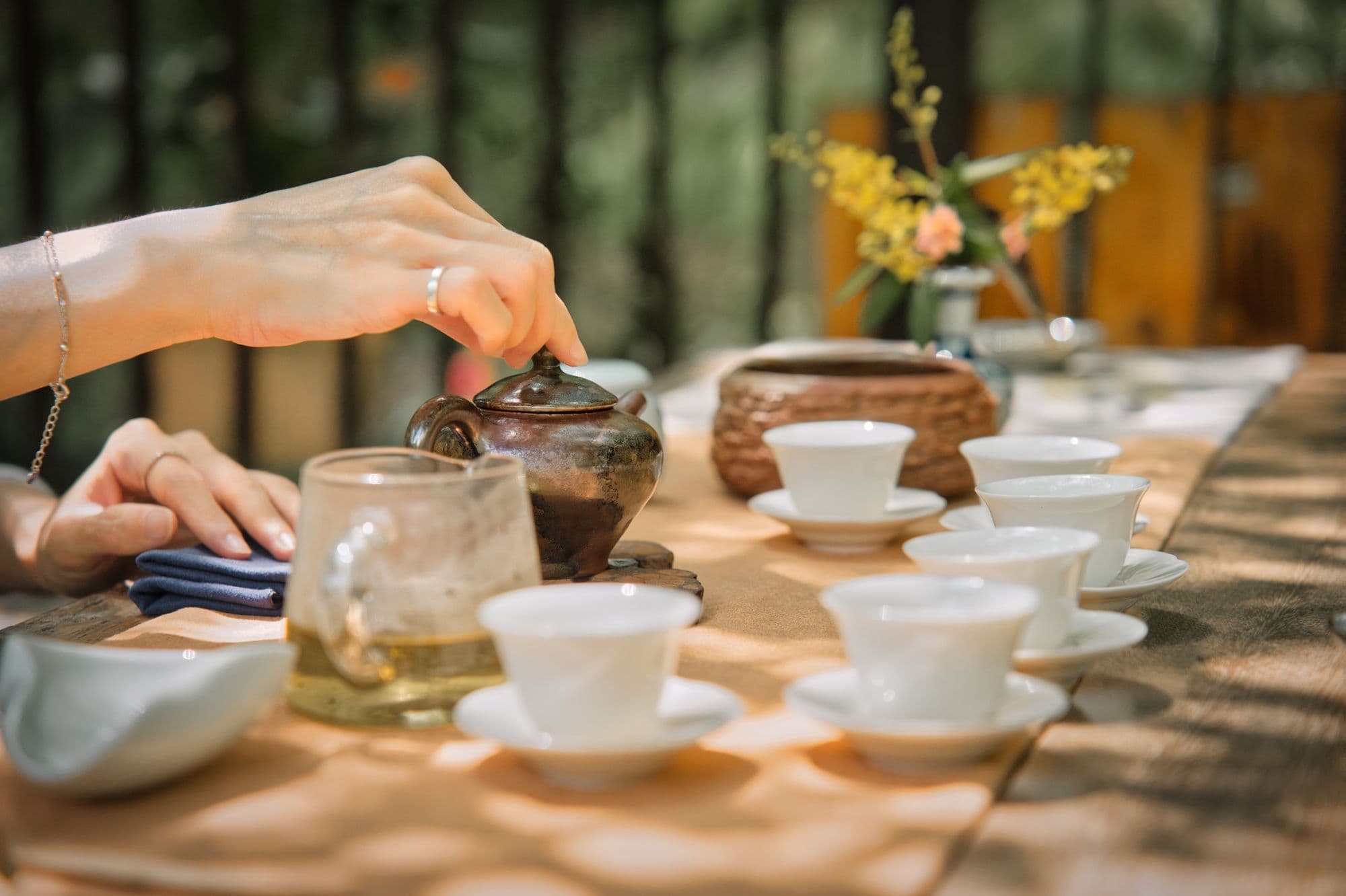
Tea Ceremony
Led by a professional tea master, savor the delicate sweetness of Taiwan high-mountain tea amid the enchanting mountain scenery of Meishan, Chiayi.